QuickBooks Shipping Manager Not Working? Complete Guide to Causes, Errors, and Solutions
- Hamey Martin
- 2 minutes ago
- 5 min read

QuickBooks Shipping Manager is a useful feature that helps businesses streamline shipping tasks directly within QuickBooks. It allows users to process shipments, print shipping labels, track packages, and manage shipping-related information without leaving the accounting software. However, many users encounter situations where QuickBooks Shipping Manager stops functioning properly, creating delays in order fulfillment and business operations.
If you are experiencing a QuickBooks Shipping Manager Not Working issue, understanding the possible causes and troubleshooting methods can help restore functionality quickly. This guide explains common reasons behind Shipping Manager problems, symptoms to watch for, and effective troubleshooting steps.
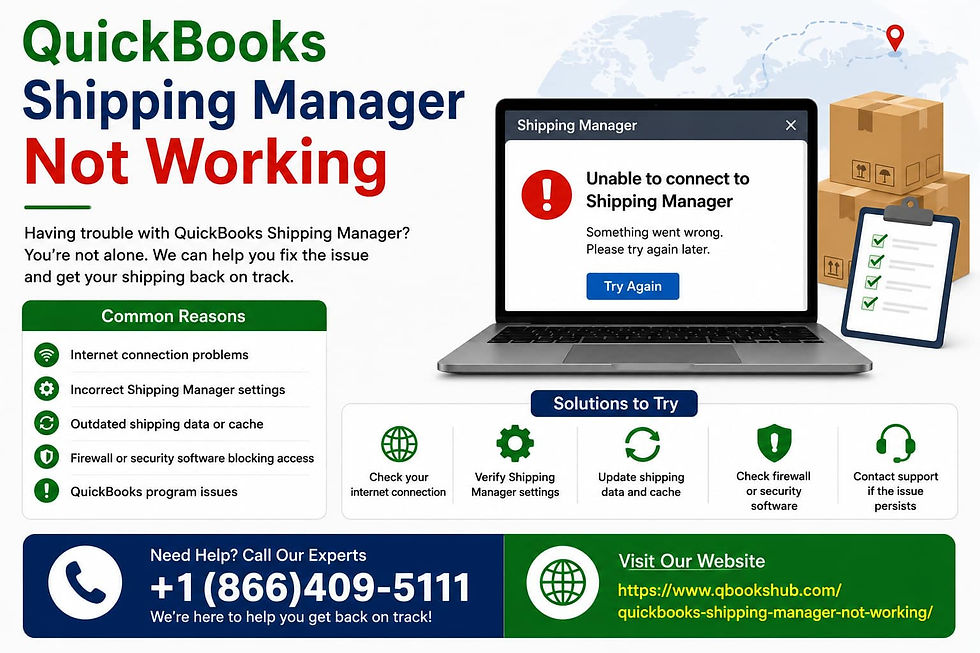
What Is QuickBooks Shipping Manager?
QuickBooks Shipping Manager is an integrated shipping solution available in certain versions of QuickBooks Desktop. It enables users to connect with shipping carriers, create shipment records, print labels, and track deliveries directly from customer invoices and sales orders.
The feature helps reduce manual data entry by automatically importing customer and shipping information from QuickBooks transactions.
Common Signs That QuickBooks Shipping Manager Is Not Working
When Shipping Manager encounters a problem, users may notice one or more of the following symptoms:
Shipping Manager fails to open.
Error messages appear when processing shipments.
Shipping labels do not print correctly.
Carrier information fails to load.
Shipping rates are unavailable.
QuickBooks freezes while creating shipments.
Tracking numbers are not generated.
Database-related errors occur during shipping tasks.
Shipping Manager closes unexpectedly.
Recognizing these symptoms can help identify the underlying cause more efficiently.
Why QuickBooks Shipping Manager Stops Working
Several factors can prevent Shipping Manager from functioning properly. Understanding these causes is the first step toward resolving the issue.
Damaged Shipping Manager Database
One of the most common causes is a damaged or corrupted Shipping Manager database. Since the application relies on stored shipping data, corruption can prevent normal operations.
Outdated QuickBooks Version
Using an outdated QuickBooks version may create compatibility issues with shipping services and integrated carrier systems.
Network Connectivity Problems
Shipping Manager communicates with carrier servers to retrieve rates and process shipments. An unstable internet connection can interrupt this communication.
Damaged Company File
If the QuickBooks company file contains data damage, shipping-related information may not load correctly.
Firewall or Security Restrictions
Firewalls and antivirus applications may block Shipping Manager components from accessing necessary online services.
Missing Windows Components
Shipping Manager relies on certain Windows services and system files. Missing or damaged components can prevent the feature from launching properly.
Incorrect User Permissions
Limited user permissions may restrict access to shipping-related functions within QuickBooks.
Troubleshooting the QuickBooks Shipping Manager Database Error
Database errors are among the most frequently reported Shipping Manager problems. These errors often occur when the shipping database becomes damaged or inaccessible.
Step 1: Close QuickBooks
Exit QuickBooks completely before beginning troubleshooting.
Step 2: Locate Shipping Manager Files
Navigate to the Shipping Manager data folder on your computer. The exact location may vary depending on your QuickBooks version and Windows configuration.
Step 3: Create a Backup
Before making any changes, create a backup of the Shipping Manager database and company file.
Step 4: Rename Database Files
Renaming damaged database files forces QuickBooks to create fresh files during the next launch.
Step 5: Restart QuickBooks
Open QuickBooks and test Shipping Manager functionality.
If the issue was caused by database corruption, the feature may begin working normally after rebuilding its files.
Verify and Rebuild Company Data
QuickBooks includes built-in tools that can detect and repair company file damage.
Run Verify Data
Open QuickBooks.
Select File.
Choose Utilities.
Click Verify Data.
QuickBooks scans the company file for errors and inconsistencies.
Run Rebuild Data
If Verify Data identifies problems:
Go to File.
Select Utilities.
Choose Rebuild Data.
Follow the on-screen instructions.
After rebuilding, test Shipping Manager again.
Update QuickBooks Desktop
Many Shipping Manager issues are resolved through software updates.
Install the Latest Updates
Open QuickBooks.
Select Help.
Click Update QuickBooks Desktop.
Choose Update Now.
Install available updates.
Restart your computer after the update completes.
Keeping QuickBooks current helps ensure compatibility with shipping services and carrier integrations.
Check Internet Connectivity
Because Shipping Manager communicates with carrier systems online, internet connectivity is essential.
Test Your Connection
Open a web browser.
Visit multiple websites.
Verify stable connectivity.
Restart networking equipment if necessary.
Slow or intermittent internet connections may cause shipping transactions to fail.
Configure Firewall and Security Settings
Security software can occasionally interfere with Shipping Manager communication.
Review Firewall Settings
Ensure QuickBooks and Shipping Manager components are allowed through Windows Firewall and third-party security applications.
Add Exceptions
Create exceptions for:
QuickBooks executable files
Shipping Manager services
Related QuickBooks processes
After adjusting settings, restart the computer and test the feature again.
Repair QuickBooks Installation
Damaged program files can prevent Shipping Manager from working properly.
Use Windows Repair
Open Control Panel.
Select Programs and Features.
Locate QuickBooks.
Click Uninstall/Change.
Choose Repair.
Allow the repair process to complete before reopening QuickBooks.
Check User Permissions
Administrative permissions may be required for certain Shipping Manager functions.
Run QuickBooks as Administrator
Close QuickBooks.
Right-click the QuickBooks icon.
Select Run as Administrator.
This ensures the application has sufficient permissions to access shipping-related resources.
Reinstall Shipping Components
If Shipping Manager continues to malfunction, reinstalling associated components may help.
A clean installation removes damaged files and restores default configurations.
Perform a Clean Installation
Uninstall QuickBooks.
Rename installation folders.
Reinstall QuickBooks.
Apply updates.
Configure Shipping Manager again.
This process often resolves persistent issues caused by damaged program files.
Preventing Future Shipping Manager Problems
Preventive maintenance can reduce the likelihood of recurring issues.
Keep QuickBooks Updated
Regular updates include bug fixes, security enhancements, and compatibility improvements.
Verify Data Periodically
Running Verify Data regularly helps identify file damage before it affects operations.
Create Frequent Backups
Maintaining backups ensures important data can be restored if corruption occurs.
Monitor Internet Stability
Reliable internet connectivity is critical for successful shipping transactions.
Maintain System Security
Keep antivirus software updated while ensuring QuickBooks components remain properly authorized.
Review User Permissions
Periodically confirm that authorized users retain appropriate access levels.
When Shipping Manager Errors Require Advanced Troubleshooting
Some issues may involve deeper system-level problems, including:
Windows registry damage
Corrupted system files
Network configuration errors
Carrier integration failures
Third-party software conflicts
In such cases, advanced diagnostics may be necessary to identify the root cause.
Conclusion
QuickBooks Shipping Manager Not Working issues can disrupt daily shipping operations and slow business workflows. Common causes include database corruption, damaged company files, outdated software, internet connectivity problems, firewall restrictions, and installation issues. Fortunately, most problems can be resolved through systematic troubleshooting.
By updating QuickBooks, verifying company data, repairing installations, checking security settings, and rebuilding damaged databases, users can often restore Shipping Manager functionality quickly. Regular maintenance and preventive practices can also help minimize future disruptions and ensure smoother shipping operations within QuickBooks.


Comments